November 8-14, 2026
Temperature
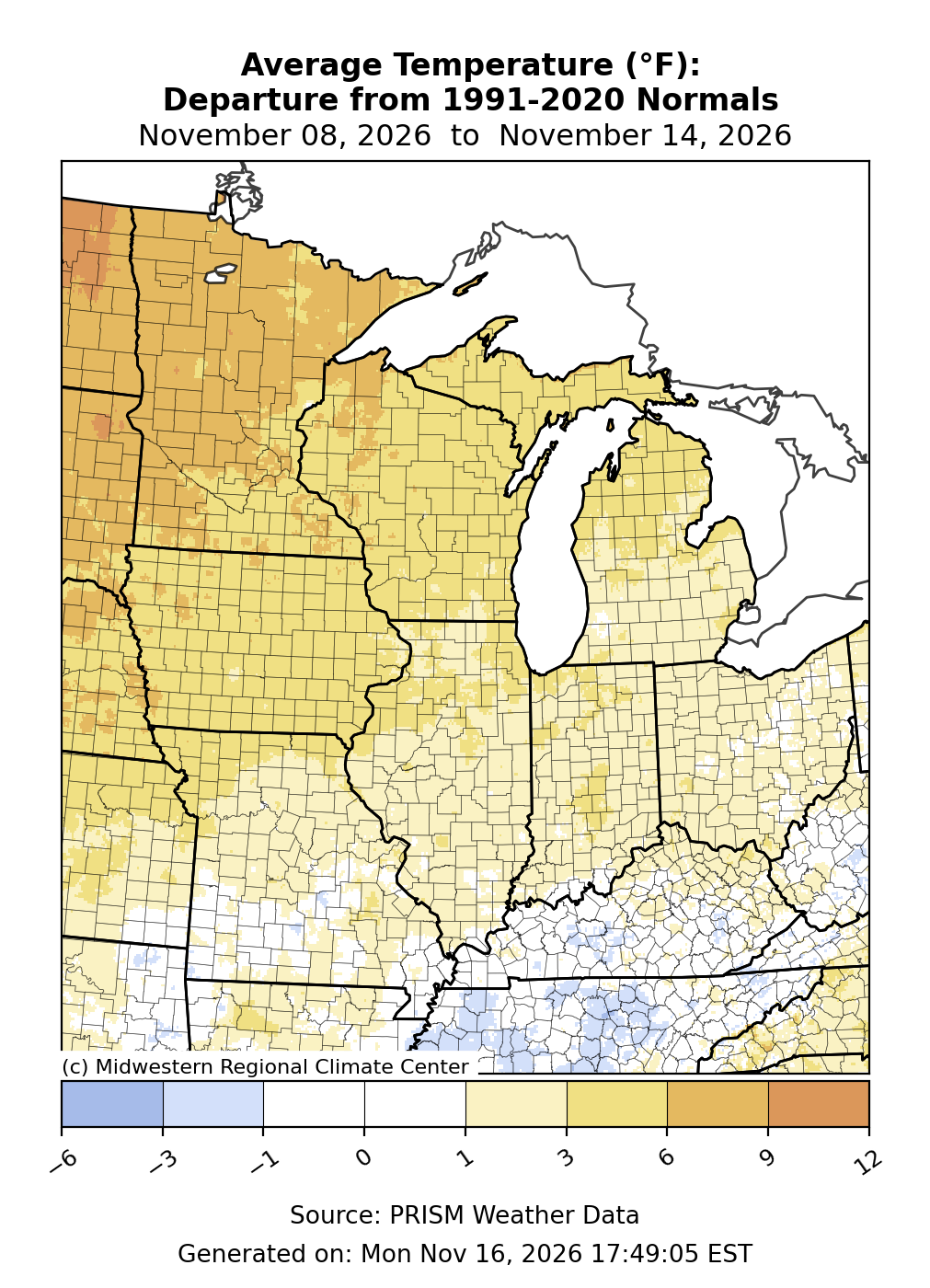
Average temperatures were mostly above normal for the region (Figure 1). Across Minnesota, temperatures were 6-97deg;F above normal for the week. Across Iowa, northern Michigan, and Wisconsin, temperatures were 3-6°F above normal. Along and south of I-80 in Illinois, Indiana, and Ohio, temperatures were 1-3°F above normal. Temperatures averaged near normal across the far south.
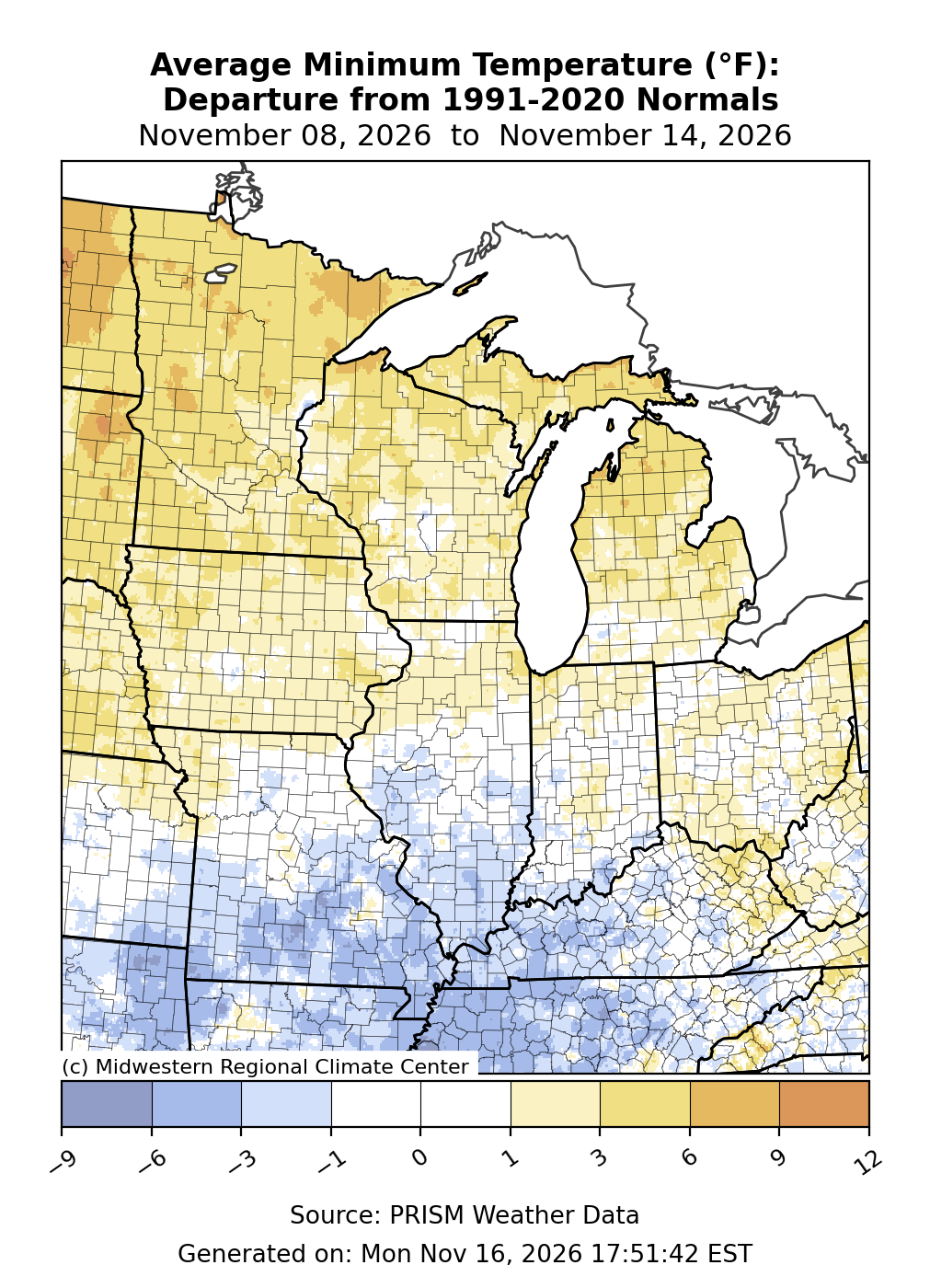
Minimum temperatures were above normal to the north and below normal to the south (Figure 2). Across Minnesota and Michigan’s Upper Peninsula, minimum temperatures were 3-6°F above normal. The rest of the region north of I-80 was 1-3°F above normal. Near-normal minimum temperatures were observed across the region’s midsection, while minimum temperatures were up to 6°F below normal across southern Missouri, southern Illinois, and western Kentucky.
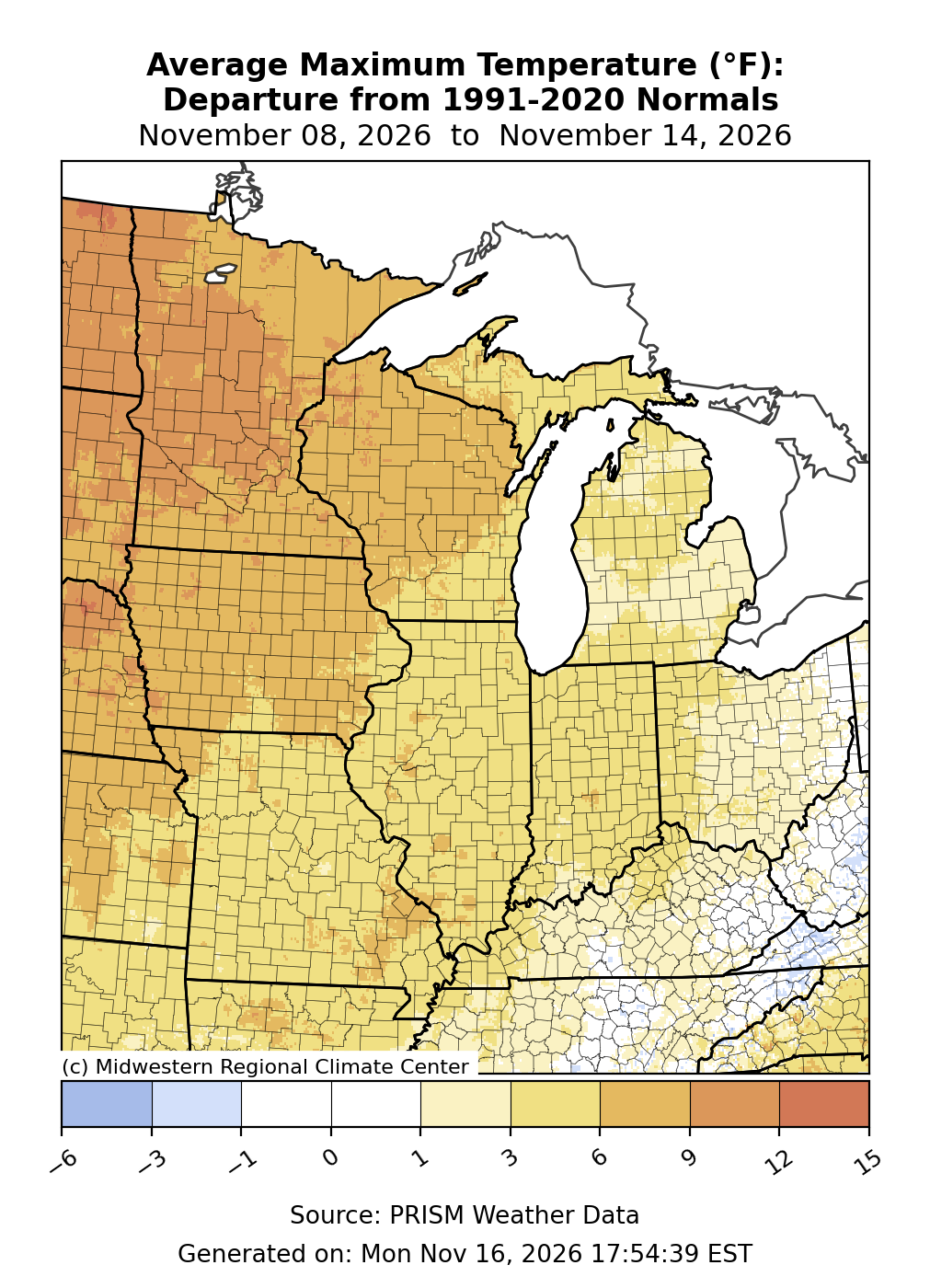
Maximum temperatures were above normal regionwide (Figure 3). Across parts of Minnesota, maximum temperatures were as much as 12°F above normal. The remainder of Minnesota, Wisconsin, and Iowa were 6-9°F above normal. Much of the rest of the region observed maximum temperatures 3-6°F above normal. Across eastern Kentucky and Ohio, minimum temperatures were only slightly above normal by 1-3°F.
Precipitation & Drought
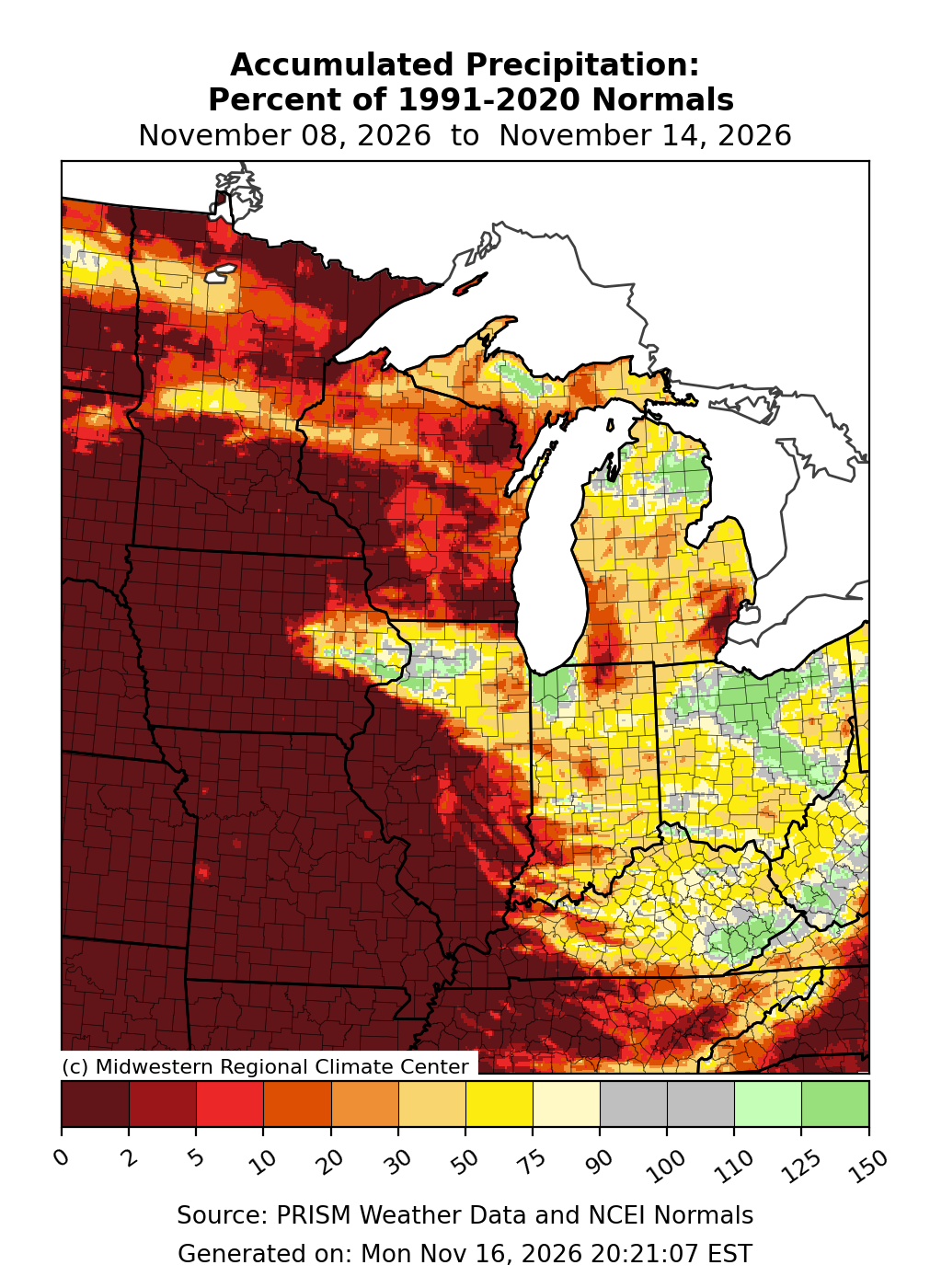
Precipitation was lackluster, especially west of the Mississippi River where nearly no precipitation was observed (Figure 4). To the east, precipitation wasn’t much better, with less than 50 percent of normal precipitation across much of Indiana and Michigan. Some parts of Ohio, northern Michigan, Northwest Indiana, and the Kentucky Coalfields observed near- to slightly above-normal precipitation.
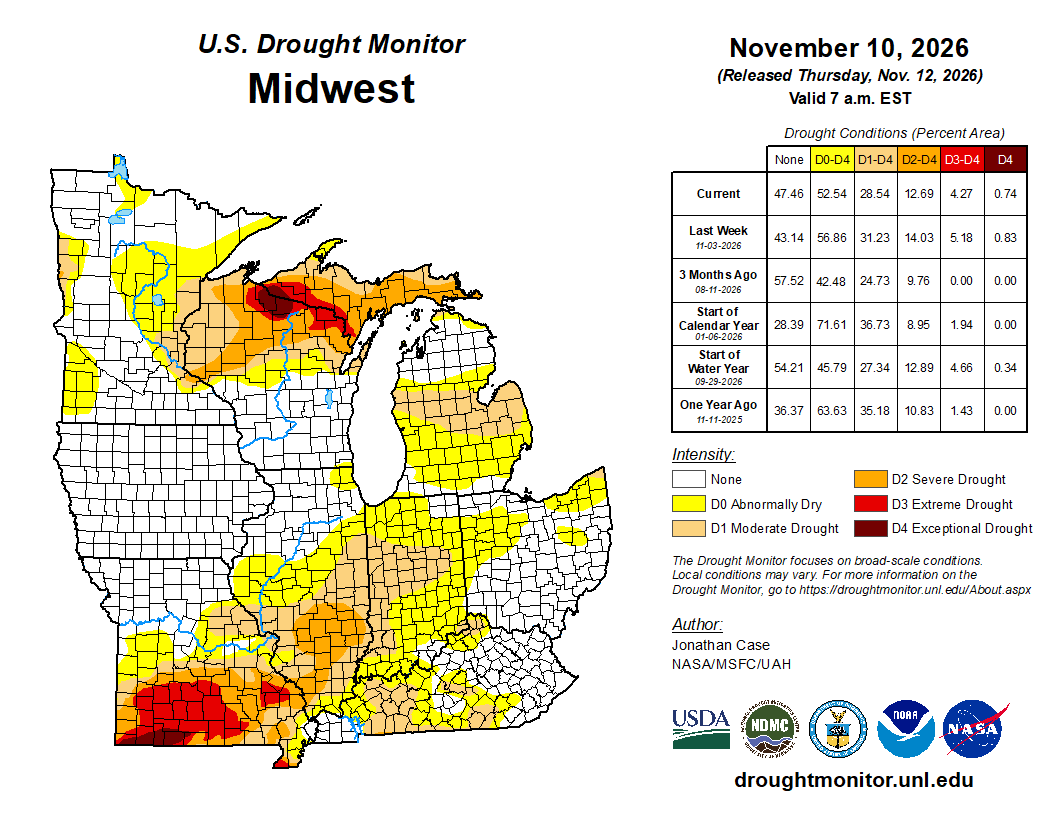
From November 3 to November 10, drought slightly decreased across the region (Figure 5). Some areas, such as Illinois and Indiana, expanded, with continued dryness increasing D1 (moderate drought) and D2 (severe drought). Dry conditions decreased across Kentucky and remained largely unchanged in Missouri. However, increased drought across Illinois and Indiana was offset by a significant decrease in drought across the Upper Midwest. Drought was largely removed from Minnesota, and conditions improved across Michigan and Wisconsin. In Minnesota, D0 (abnormally dry) decreased dramatically from 73 percent coverage to 38 percent coverage, while D1 decreased from 27 percent coverage to 7 percent coverage.