October 2026
 | Regional Climate Summary Report |
Overview
Near-record warmth dominated the Midwest during October, with most areas receiving below-normal precipitation.
Temperature
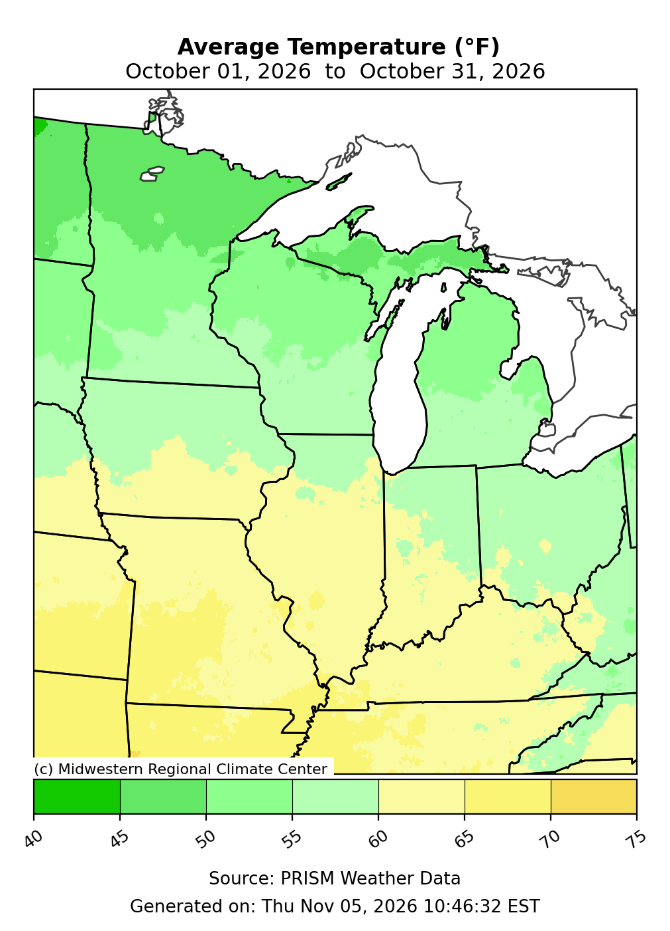
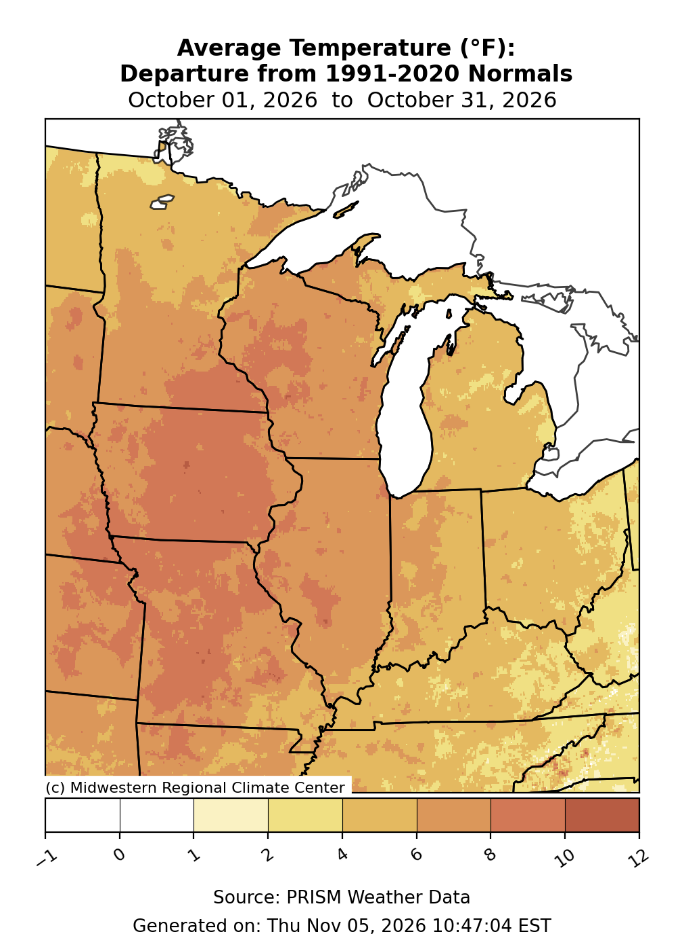
The average October temperature for the Midwest was 58.0°F, which was 6.6°F above the 1991-2020 normal. Final rankings indicate the Midwest had its 3rd warmest October on record (dating back to 1895). The entire region had abnormal warmth ranging from 4°F to 6°F above normal in the east up to 8°F to 10°F above normal in the west. Statewide average temperatures ranged from 4.3°F above normal in Ohio to 8.2°F above normal in Iowa. Final rankings indicate that all nine Midwest states had a top 10 warmest October: Missouri (2nd), Illinois (3rd), Iowa (3rd), Wisconsin (4th), Indiana (5th), Minnesota (tied 5th), Michigan (8th), Ohio (8th), and Kentucky (tied 8th). Warm conditions persisted throughout the entire month, with a notable surge in warmth during the second week of October. During the October 10-13 period, daytime high temperatures reached into the 80s and 90s across the western half of the region, which is 20°F to 30°F above normal. In Minnesota, temperatures in the Twin Cities rose to 90°F on October 10-11, marking the first time consecutive 90°F days were observed in October since records began there in 1871. In Houghton, Michigan, the temperature rose to 86°F on October 11, which was the latest calendar date for a temperature that warm since records began in 1887. Des Moines, Iowa, had 4 consecutive days with temperatures above 85°F from October 9-12 for only the second time in October since records began in 1878. While the region had ample warmth across the month, most of the upper Midwest and Iowa reached their first 32°F temperature of the fall season in mid-October, arriving 1-3 weeks later than average. Freezing temperatures were short-lived, however, with most of Iowa, southern Minnesota, southern Wisconsin, and southern Michigan not reporting any freezing temperatures during the final 10-12 days of the month. Many areas across the central and lower Midwest ended the month without any freezing temperatures, allowing the growing season to continue into November. The majority of long-running weather stations across the entire Midwest had a top-10 warmest October. For instance, Indianapolis had its 3rd warmest October dating back 156 years, and Des Moines had its 3rd warmest October going back 149 years. Across the lower Midwest, numerous cities in Missouri, Illinois, Indiana, and Kentucky had their most or 2nd most number of October days with high temperatures reaching or exceeding 70°F.
Precipitation
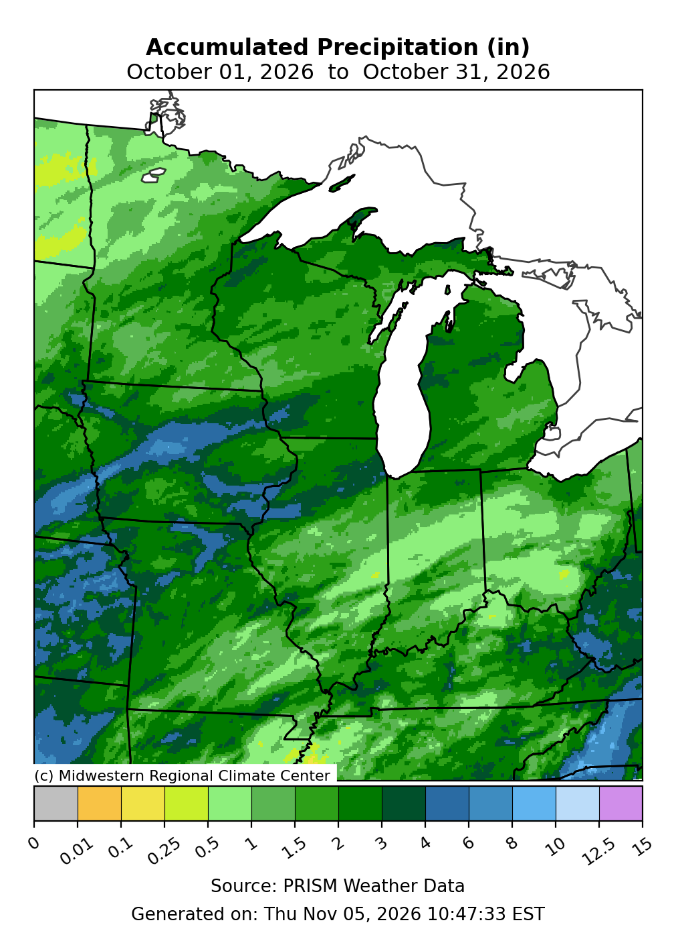
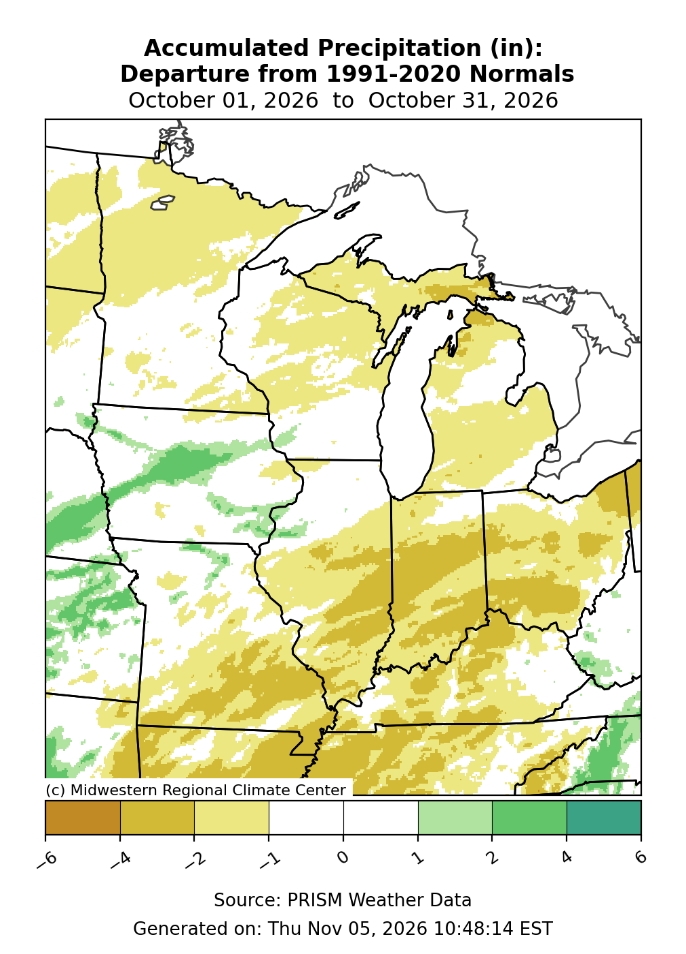
October precipitation totaled 1.92 inches for the Midwest, which was 1.18 inches below normal, or 62 percent of normal. In the southeastern half of the region, precipitation was about 1 to 4 inches below normal. In the northwestern half of the region, conditions were more variable with a mix of above-, near-, and below-normal precipitation. Statewide precipitation totals ranged from 0.19 inches above normal in Iowa to 1.94 inches below normal in Indiana. There were no notable state or local monthly precipitation records for October.
Drought

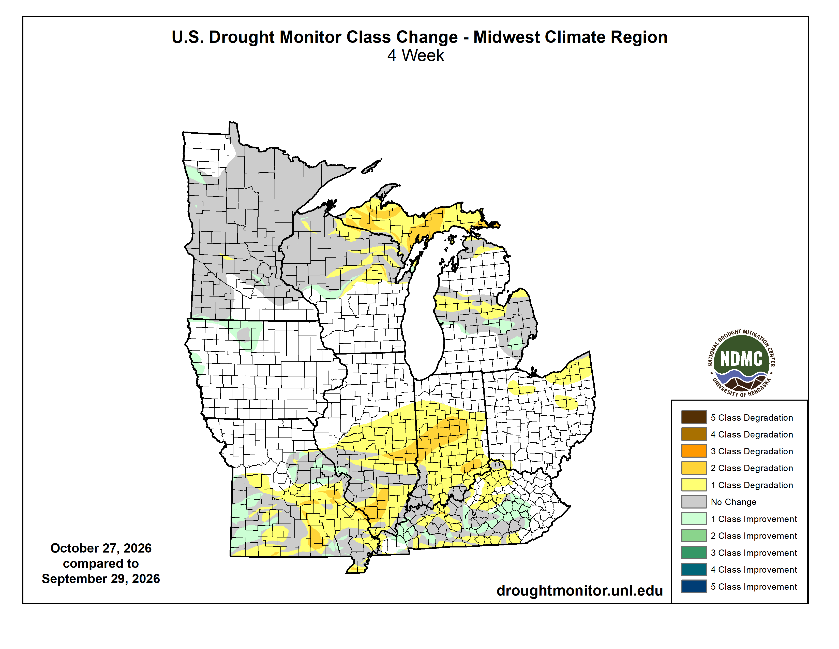
- Drought Status: 33% of region in D1-D4 (+5.6% over last 4 weeks)
- Significant Change/Impacts: Michigan’s Upper Peninsula and a wide swath across the lower Midwest had a one- or two-category degradation during October.
Drought and abnormal dryness affected about 54 percent of the Midwest in late October, which was about 9 percent more than in early October. Drought conditions were most intense along the southern shores of Lake Superior and across the southern half of Missouri. A corridor across the central Midwest from Iowa to Ohio remained drought-free with only minimal areas of abnormal dryness. In the north, extreme (D3) to exceptional (D4) drought persisted and slightly expanded, affecting portions of Minnesota, Wisconsin, and Michigan. Northern rivers and streams were running below normal, while small creeks had little to no water. Farmers were required to haul water for livestock. Dam operators have continued to reduce flows through the dams (this has been ongoing since summer). Row crops were stressed, and concerns about yield reductions linger. In the south, D4 affected a multi-county stretch in the far southwestern portion of Missouri, while moderate (D1) and severe (D2) drought expanded northward and eastward into Illinois, Kentucky, and Indiana. Across Missouri and southern drought-affected areas, streamflows were below normal, and fire season was starting early. Livestock stress was high due to water stress paired with persistent warmth. Crop yields were reduced, and pastures had limited regrowth.