October 15-21, 2026
Temperatures
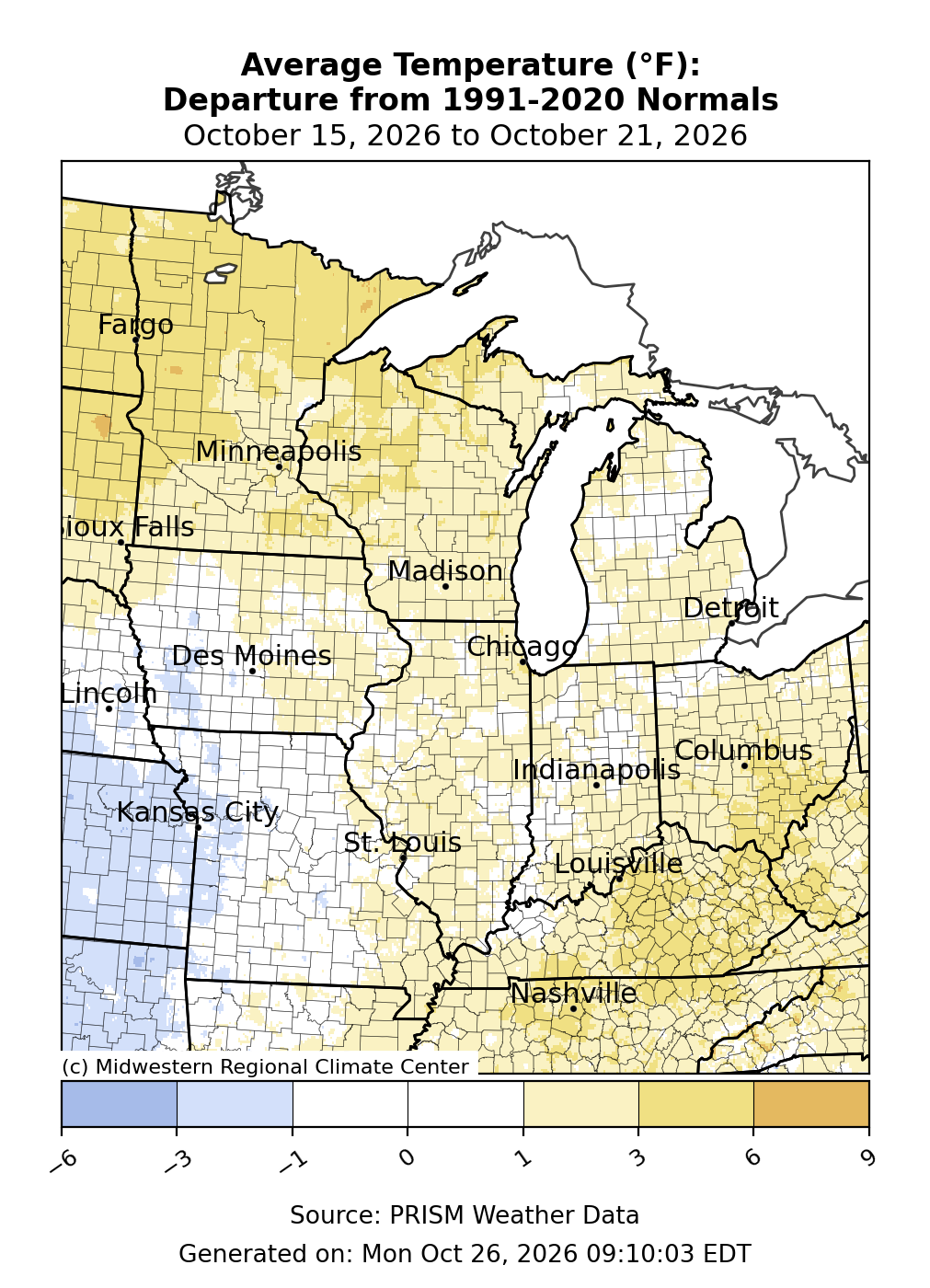
Average temperatures were above normal for much of the region (Figure 1). In many areas, average temperatures were only 1-3°F above normal, though pockets of Kentucky, southern Ohio, and Minnesota saw temperatures 3-6°F above normal. Temperatures were near normal for Iowa and Missouri and even slightly below normal near the Kansas City, Missouri area.
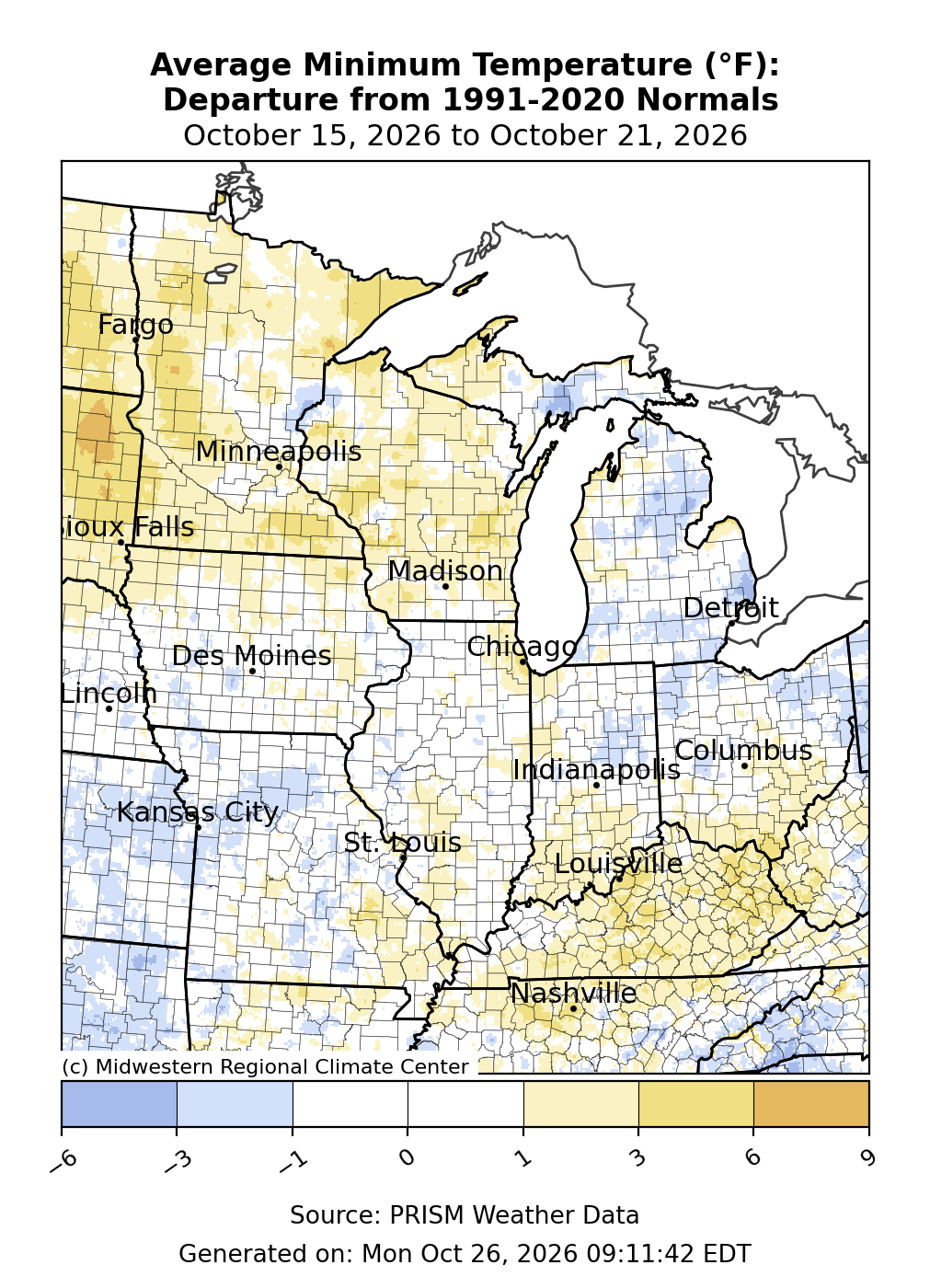
Minimum temperatures were generally near normal, with pockets of both above average and below average temperatures (Figure 2). Minimum temperatures were more widespread above normal across Minnesota, Wisconsin, and Kentucky. Minimum temperatures were less anomalous elsewhere, and parts of northern Ohio, Michigan, and Missouri were even below normal.
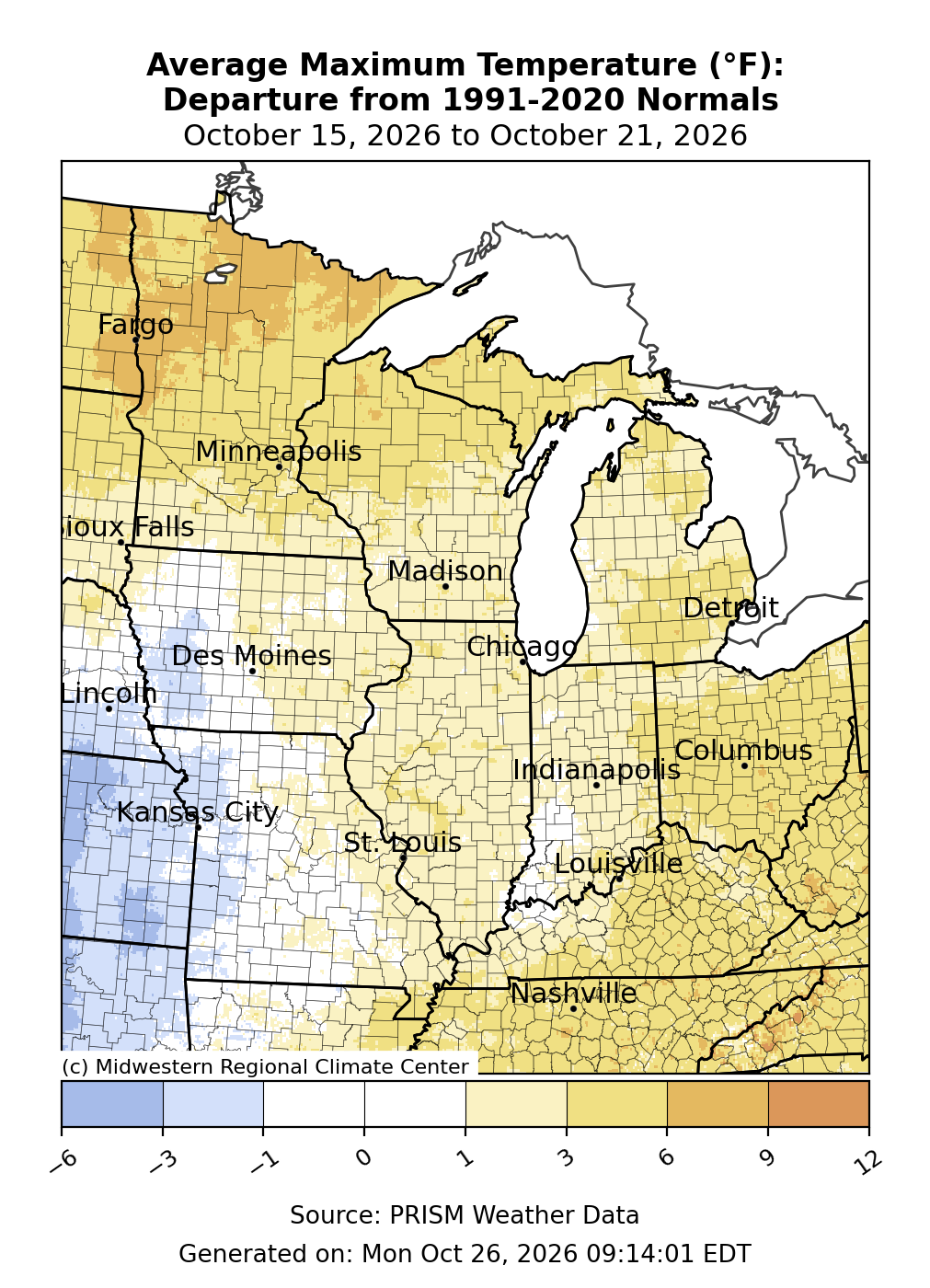
Maximum temperatures were uniformly above normal (Figure 3). The most anomalous maximum temperatures occurred over northern Minnesota, where they were 6-9°F above normal. The rest of the Upper Midwest, Ohio, and Kentucky were 3-6°F above normal. Southern Wisconsin, western Michigan, Indiana, eastern Iowa, and Illinois were 1-3°F above normal. Temperatures were near to slightly below normal across Missouri and western Iowa. In Paducah, Kentucky, the temperature rose to 90°F on October 15, the second-latest 90°F observation of the calendar year since records began in 1937.
Precipitation/Drought
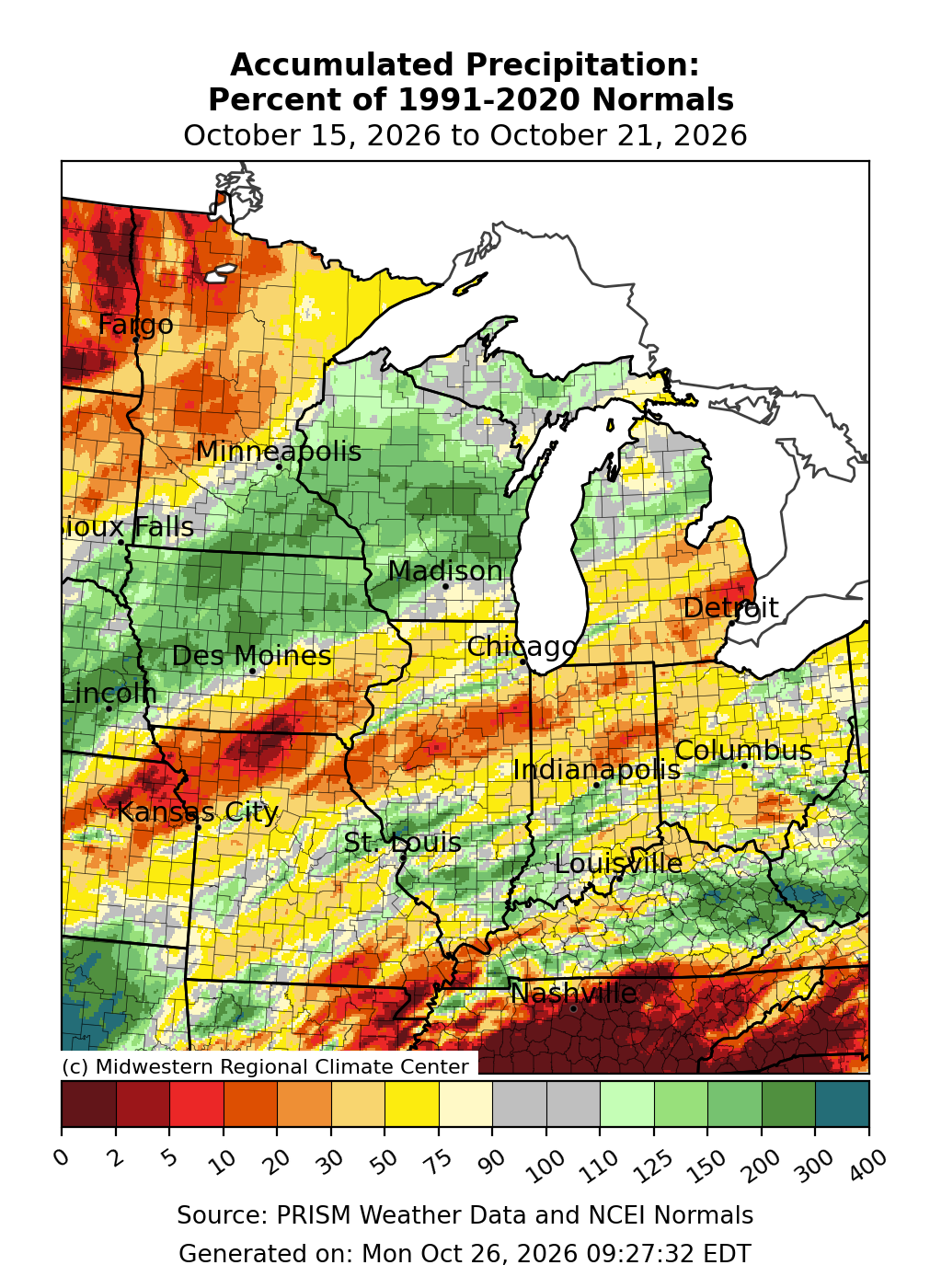
Precipitation was over 100 percent of normal across much of Iowa, southern Minnesota, and Wisconsin (Figure 4) Precipitation was less than 50 percent of normal across southeastern Iowa, northern Missouri, the Missouri Bootheel, northern and central Minnesota, and central Illinois. Elsewhere, precipitation was generally between 50 and 100 percent of normal.
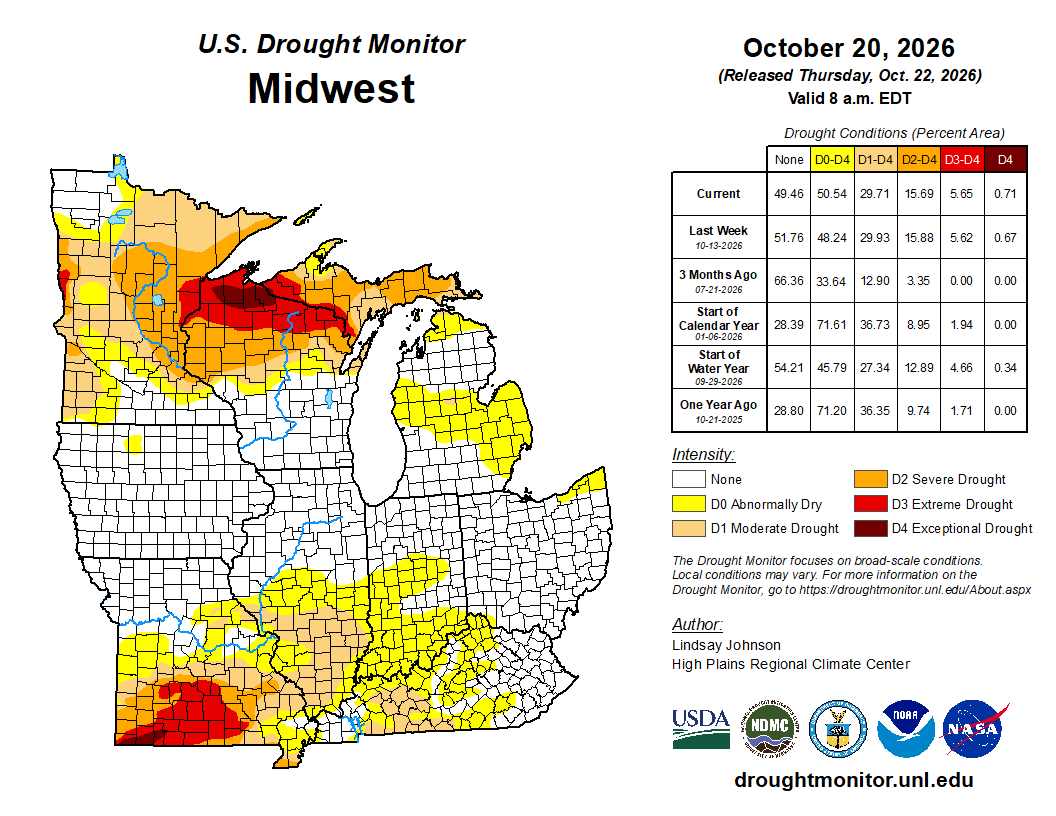
From October 13 to October 20, drought remained largely unchanged (Figure 5). D0 (abnormally dry) expanded the most, with 50 percent of the region now D0 as of October 20, with the greatest increase in southern Indiana and southern Illinois. D1 (moderate drought), D2 (severe drought), and D3 (extreme drought) remained largely unchanged, with minor changes across the region’s south. D4 (exceptional drought) expanded slightly in southwestern Missouri, while the same conditions went unchanged across northern Wisconsin.